12/09/2008

Zimbabwe deal: more details


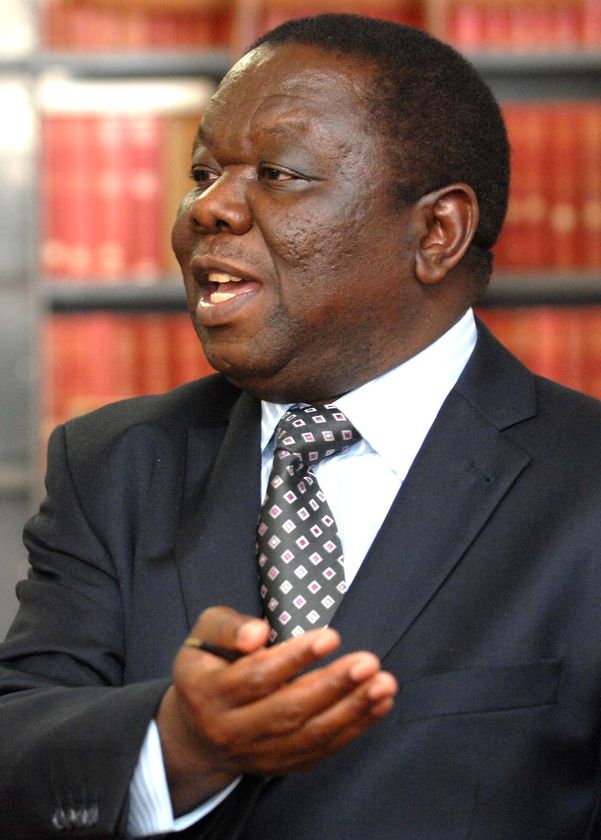
David Coltart, MDC Senator for Bulawayo South

Zimbabwe deal: more details from Senator David Coltart

The bare bones of the deal are as follows. Constitutional amendment 19 will shortly be moved in Parliament. It will enable to the setting up of an inclusive Government which in turn will initiate an all inclusive process of Constitutional reform (which will include civil society). That process will last 18 months by which time a new democratic Constitution must be implemented, which will also include a time frame for new elections at some point to be conducted in terms of the new Constitution.

The inclusive Government will have Robert Mugabe as President with greatly reduced powers to those he enjoys today. There will be two, largely ceremonial, Vice Presidents from Zanu PF.

Morgan Tsvangirai will be Prime Minister. Although he does not have absolute power he does have substantial power. For example he will advise Mugabe on all future appointments including Judges, Ambassadors and the like. There will be two Deputy Prime Ministers, one from MDC T and one from MDC M.

There will be a slightly cumbersome arrangement for conducting Government business which is the essence of the compromise agreed to following the impasse of the last 4 weeks. Cabinet will be chaired by Mugabe; Tsvangirai will be the vice Chair. Then there will be a Council of Ministers chaired by Tsvangirai which will supervise the work of Cabinet.

The Cabinet will largely reflect the votes cast for the different parties in the March election in which Zanu PF got the most votes (if not the most seats), followed by the MDC T and MDC M. In a 31 person Cabinet Zanu PF will have 15 seats, MDC T 13 and MDC M 3. There will be 8, 6 and 1 Deputy Ministers respectively. Accordingly if the two MDC factions work together, which they must in the national interest, they will enjoy a majority in Cabinet.

This is undoubtedly historic but we still have a long and treacherous road to travel. Even had we in the combined MDC obtained total control the challenges are immense. The grave humanitarian and economic crises are enough to test any Government. The new Cabinet that will have to address these challenges is composed of protagonists – virtually all of the Cabinet Ministers to be appointed by the MDC T and M have at some stage in the last 9 years been brutalized on the instructions of those they will now have to work with. Zimbabwe remains highly polarised and it will take statesmanship on all sides to make this work.


The banner headline reads 'Farming God's Way Project'

Rogues Gallery

The Most Rev. Stephen Than Myint Oo (Myanmar)


Episcopal Life has assembled snapshots of all the Primates, including a blank for central Africa. You can see them all here.


My favourite is Stephen Than Myint Oo. I love the (nearly) matching beret and jacket. And that he's forgotton his collar.

The award for the most colourful goes to Maurício José Araújo de Andrade (Brazil), for the most depressed Martin de Jesus Barahona (Central America), Carlos Touche-Porter (Mexico) is the least comfortable and Peter Jasper Akinola (Nigeria) has the best smile, as well he might.

Other unique features include one crook, Katharine Jefferts Schori (USA), one library Rowan Douglas Williams (England), one pen Joel Vidyasagar Mal (North India) while Henry Luke Orombi (Uganda) has the best camouflage, which is odd for an official picture.

Funny world, Anglicanism.

Disaggregation

Dave Walker's explanation of the Southern Cone


Thinking Anglicans has a round up of stories about the Southern Cone and Greg Venables' avoidance of Archbishop Fred Hiltz.

Viewed from where I stand (which is a long way away geographically and theologically) it is hard to see sufficient detail to be able to grasp the overall picture. I wonder what the relationship is between Archbishop Venables, a Brit, and the African Archbishops who, under the umbrella of GAFCON, are consolidating their raids into North America in the form of a North American province.

So, are there enough conservative congregations to go round with leading to conflict between GAFCON and the Africans? Are they in co-operative communion with one another in the same way in which both the Episcopal Church and the Church of England work in Europe? Or in competition with one another for the same fish in the episcopal sea? Is Venables trawling in Canada because the Africans have been too busy south of the border or because the Canadians were uncomfortable with the idea of African Archbishops? Are the two groups collecting different species of conservative?

In the meantime the Diocese of Pittsburgh continues to prepared for divorce by agreeing to 'a court-appointed neutral party inventory all of its property and assets as it prepares for a final vote on seceding from the Episcopal Church.' here.

Cautious welcome to Zimbabwe 'deal'

Morgan Tsvangirai to be Prime Minister of Zimbabwe

Press Association

British politicians welcomed the news that Zimbabwe looked to be on the brink of a historic power-sharing deal that could finally end Robert Mugabe's 28-year monopoly on power in the country.

South Africa's President Thabo Mbeki announced the news and said a government of national unity would be announced on Monday.

The announcement was given a cautious welcome in Britain by former Cabinet minister and Minister for Africa Peter Hain.
He said the reported deal between President Mugabe and opposition leader Morgan Tsvangirai was "very good news" for the "long-suffering people" of the country.

But he said granting Mr Mugabe immunity from prosecution as part of the deal may have to be a "necessary" step to end the "nightmare" in the country.

Before the news of the announcement, Prime Minister Gordon Brown said at his monthly press conference he wanted to see an outcome "that reflects the democratic will of the Zimbabwean people".

He added: "We don't yet know all the details of the agreement, but we want a transition so that it is possible for the MDC and those people who have been legitimately elected to be able to have their legitimate place in the Government of Zimbabwe and we will judge our response by the extent to which that is happening."

The government in Zimbabwe and the opposition MDC had already agreed that Mr Tsvangirai would be a Prime Minister with Mr Mugabe staying on as president.

But negotiations had stalled over the precise allocation of power between the two men who have been bitter rivals for a decade.

Mr Mugabe, who has been in power since independence from Britain since 1980, won a presidential run-off election in June unopposed after Mr Tsvangirai withdrew. He withdrew after claiming the MDC was the target of state violence ordered by Mr Mugabe.


==============


Other reports give a little more detail of the complexities of the deal:


In the Star Tribune


Officials in both the governing and opposition party described an arrangement that seemed to leave neither man in charge. That may reduce the chances that the accord will bring new stability and attract the foreign aid needed to rebuild the country's economy.

Under the agreement, officials said, Tsvangirai would become prime minister and oversee a council of ministers that would formulate and carry out policies. Mugabe would retain his title of president and would head a Cabinet apparently made up of the same group of ministers. How the government would resolve conflicts was not clear.

Asked who would head the government under this arrangement, Nelson Chamisa, a spokesman for the opposition, did not name one man or the other but instead replied, "This is an inclusive government." He said executive power would be shared by the president, the prime minister and the Cabinet.


The Boston Globe says,
The complicated agreement makes Mugabe's rival, Morgan Tsvangirai of the Movement for Democratic Change, prime minister and creates a government whose ministers meet twice in parallel structures - once with the prime minister in charge and once under the president.

BBC and Reuters accounts are reproduced here.

More detail will no doubt emerge soon. And time, and the collapse of the economy, will tell.

Time for God's Creation


Professor Andrew Linzey

Press Release from Professor Andrew Linzey

RSPCA urges clergy to celebrate animals as Church places fresh emphasis on protecting creation

The RSPCA is calling upon clergy to celebrate animal services with renewed focus this October following a new Church of England initiative to make 'Time for God's Creation'.

Launched in June, the Archbishop of Canterbury and leaders of other denominations called upon Christians throughout England to put the environment at the heart of their worship this autumn.

Oxford theologian the Revd Professor Andrew Linzey said the initiative presented a perfect opportunity for congregations to re-examine their duties towards living creatures.

He said: “It is vital that Christians remember their specific responsibilities towards animals during this welcome renewal of environmental concern. What we call ‘the environment’ or ‘creation’ comprises individual creatures, many of them sentient, who need our care.

“Animal Welfare Sunday falls on 5th October and provides a real opportunity for clergy to organise services that both celebrate God’s creatures and underline the importance of behaving responsibly towards them.”

RSPCA director general Mark Watts said: “Many people tend to think that animal abuse happens at the hands of just a few, but in truth as a society we need to think far more deeply about how our lifestyle impacts on animals and how we may be, directly or indirectly, permitting suffering.

“Faith groups can play an important role. We hope they will seize the moment and take a lead in promoting responsible attitudes towards animals.”

The RSPCA has published a Service for Animal Welfare booklet, written by Professor Linzey, complete with prayers, readings and liturgies, which is available to download from the Society’s website (www.rspca.org.uk).

The Archbishop of Canterbury, Dr Rowan Williams, is Vice-Patron of the RSPCA, which was founded by an Anglican priest, the Revd Arthur Broome in 1824.

- ends -


Notes: The 'Time For God's Creation' initiative follows a resolution made at the Third European Ecumenical Assembly, attended by representatives of Europe's Catholic, Orthodox, Anglican and Protestant churches, that a period "be dedicated to prayer for the protection of Creation and the promotion of sustainable lifestyles that reverse our contribution to climate change."

For more information contact the RSPCA press office on 0300 123 0244/0288. The Revd Professor Andrew Linzey is Director of the Oxford Centre for Animal Ethics - for further details visit www.oxfordanimalethics.com, call 01865 201565, or email Andrewlinzey@aol.com.


10/09/2008

Ugandan Archbishop excommunicates Canterbury

The Cathedral of the diocese of Bukedi, eastern Uganda, St Peter's at Tororo.


From Uganda's New Vision


The Archbishop of Bukedi Diocese the Rt. Reverend Nicodemus Okile says that he no longer recognises the Archbishop of Canterbury, Rowan Williams, as head of the church because of his stance on homosexuality.

Okile said this while laying a foundation stone at All Saints church Busitema.

He blamed the western culture for promoting homosexuality.

08/09/2008

I've led a sheltered life

After your confirmation, confirmation figures ...


from Cameo Favours

07/09/2008

SRI LANKA: A Call To Protect Civilians

A Statement from the Rt Revd Duleep de Chickera, Bishop of Colombo via the Asian Human Rights Commission (here)

SRI LANKA: A Call To Protect Civilians

People of conscience are perturbed that the current war in the LTTE occupied Vanni places the majority of civilians at tremendous risk.


Unarmed and trapped in this war zone, large numbers of civilians including children are caught in the intense cross-fire of a deadly armed confrontation. Thousands are already displaced and can flee only to places of temporary safety.


The situation faced by these civilians is even more desperate since they cannot act independently. They are under conflicting pressure from both sides to support their respective strategies of movement and fear reprisals if they do not. Their dilemma adds to their suffering.

Since both the GOSL and the LTTE claim, they are in this war for the liberation of these very civilians it is imperative that they jointly invite and assist the ICRC and UNHCR to set up peace corridors and peace zones for the safety of civilians.


My Roman Catholic colleague, the Bishop of Jaffna, the Rt. Rev Thomas Savundaranayagam has already made this suggestion and it needs to be reiterated. If for some reason these agencies are unable to intervene, then an inter-religious group of leaders must be invited to do so. The Government's assurance that food, infant milk powder, medicine and other essential commodities are being supplied to the people of this region is to be commended.


This process must be monitored by a senior Cabinet Minister in collaboration with the civil administration in the Vanni. It will also require facilitation by the military if it is to function smoothly in the circumstances of the war.


The Rt Revd Duleep de ChickeraBishop of Colombo


Posted on 2008-08-29


==============================

For this proposal the Bishop was attacked anonymously in LankaWeb News.


The plight of civilians in Vanni arose as a result of the breakdown of civilian
institutes. Against this background, Rev. Duleep de Chickera wants to boost
the sagging morale of the LTTE. By doing so, he contradicts the teaching of
the very book that he is supposed to follow to the letter [i.e. Romans 13:1]. No other rational argument can explain his desire to open up so-called 'peace zones' in
trouble spots at the eleventh hour; we have been there before, Reverend!

Rev. Duleep de Chickera's desire to elevate a terrorist outfit to the level of a legitimate government is, in the context of Biblical teachings, not divine. Since in the eyes of God, everything is black or white with no room for grey, Rev. Duleep de Chickera's attempt, by default, becomes classified as outright evil.


In a divided country, in the midst of violence, it is not easy to stand up politically and it is certain that no side will thank you for seeking an alternative.

A Communion of equals


Religious Intelligence (here) is reporting that the Prayer Book Society are getting twitchy about the Covenant and the direction its heading (though I can't see anything on the PBS site).

In particular they are worried about the diminution of the 'needs to have a less Church of England basis, particularly in regard to the formularies'.

Early on in the St Andrew’s Covenant draft it currently declares that each Church of the Communion affirms the faith “which the historic formularies of the Church of England bear significant witness.” This prominent clause now looks set to be changed.
Well, perhaps it is time that the Anglican Communion grew up and became a family of equal adults rather than a family of mother and her children. (No-one outside the Church of England would see it otherwise.)

Adopting the Covenant would have a number of effects. Membership of the Anglican Communion will then depend of being a signatory to the Covenant not on being in communion with the See of Canterbury. It may be a significant benefit to the CofE to become no more than one communion amongst three dozen, but I guess it'll be a long time before it sinks in.

However the standing of the Archbishop of Canterbury will have to change. In a family of equal adults, all of whom elect their bishops except England, it will be impossibly anomalous for their leader to be chosen by the British Prime Minister at the time.

The options are:
  1. that the Prime Minister agrees to appoint as ABC a person commended to them by the Primates of the Anglican Communion.

  2. that leadership of the Communion (chairmanship of the Primates' Meetings, convenor of a decennial conference etc.) be a person, being a Primate of a Province in good standing with members of the Covenant, and elected by the Primates or some other constituency.

  3. that the title 'Archbishop of Canterbury' be entirely separate from the Church of England and be granted to whoever leads the Communion.

Other changes might also be possible. How about:
  • electing a leader for a single period of, say, eight or ten years?

  • election by bishops across the globe, or by each Provincial synod, or by the ACC (and therefore leaving to each province whether they mandate their representatives or leave them to decide for themselves), or by an electoral college?

  • demanding that leaders account for their actions to their people and that accounts and budgets are transparent.
The choosing of a leader is important. But it is less important than the powers that the new leader will have under the Covenant. To date additional powers are in the Appendix of the St Andrew's Draft and in the terms of reference of the ad hoc Commissions, Panels, Committees etc. Power is being taken to the centre in bureaucratic and unaccountable ways.

The standing of the formularies, though obviously of concern to the Prayer Book Society is, like them, peripheral. If the PBS wish to reassert The Book of Common Prayer, its Ordinal and the 39 Articles at the heart of Anglicanism they first need to watch very carefully what powers are being grabbed in the name of Covenant.


06/09/2008

Liberal Theology

Pluralist, Adrian Worsfold, looking his best

Pluralist has posted an interesting essay on the Episcopal Cafe - Liberal Christianity's intellectual roots - which I commend to you.

Of course the comments make alternative suggestions - that's part of the way with liberals.

You may also be interested in his In Depth Theology Sessions.

And, if you're interested in the future of liberal theology you might like the 2009 MCU Conference - Perfect freedom: Liberal Theology Today and Tomorrow.

All about homosexuality


Pink and proud in Jerusalem


Of course, it's not all about homosexuality. Homosexuality is merely the shibbolth issue, the means to separate out people who would otherwise be indistinguishable. It's hard work knowing your friends from your enemies when they all look alike.


So, was Jeffery John a contender for the See of Bangor? No sooner had that suggestion swept the media and blogosphere (and my comment) than it was followed by cold water.


James at Three Legged Stool had an explanation:

You’ll never guess who “broke” the story. The Rev’d. David Anderson. Yes, THE
David Anderson who is one of the American conservatives who led the fight
against the consents for Gene Robinson. The very same Anderson who ran around
like a chicken with its head cut off, spreading assiduous lies about Robinson
and never offered an apology.

...


Andersons “intervention” is a not so subtle attempt to invigorate
fundamentalists once again to oppose John's nomination/appointment and to give
legitimacy to the fundamentalists' un-Christian actions.

Very likely. Beyond the core of committed activistis t is hard work keeping supporters together and on side in the battle. You need to keep crying 'Wolf!' at intervals.

But I'd still like to see John made Bishop - perhaps for the same reasons.


==============


For those who like their homosexuality in greater depth and length the American Theological Review has devoted its Summer 2008 edition to the issue. The Introduction is on the net.


==============

From Integrity USA:


The LGBT Religious Archives Network has posted an oral history interview with the Rev. Malcolm Johnson, one of the first openly gay clergy in the Church of England. Johnson played a critical role in the initiation of organizations that
have been formative in the lives of LGBT Anglicans and clergy: The St. Katharine's Group (social group formed in 1968), the Lesbian and Gay Christian Movement (1976) and the Clergy Consultation (1976). In this interview Johnson
relates his life journey beginning with childhood in World War II, his subsequent education and ministry training, and forty years of formal ministry through which was interwoven an extensive array of ministries with LGBT persons.


==============

Homosexuality was on the agenda at a joint meeting of the Diocese of Springfield and Diocese of Quincy presided over by Bishops Ackerman and Beckwith - and mandatory for clergy and lay leaders (August 30th).


There is an account here (Episcopal Cafe) and here comments at the Three Legged Stool. Gems include (all from Episcopal Cafe):

Both bishops took turns praising GAFCON, and expressed their ambivalence
with Lambeth.

Bishop Beckwith then stated that these issues can only be seen through the
following prism: "Is homosexual behavior a wholesome example to the Christian
community?" *TEC says 'yes'. *GAFCON says 'no'. Anglicans need consensus.

The Rev. James Fackler, retired Lutheran supply clergy in the Diocese of
Springfield, asked why he had not once heard the word 'love' in the previous 3
hours' of talk. 'Where is love for the homosexual?' he asked to deafening
silence. He further emphasized the enormous on-going damage that schism had
caused in his own church, referring to it as having a 'killing effect' on both
sides.

A layman from another moderate parish in the northern part of the Diocese
of Springfield asked Bishop Beckwith about the ongoing 'lack of communication'
in the Diocese of Springfield. The subtext of the question clearly being that
DoS parishes that dare to not subscribe to their Bishop's anti-inclusion agenda
are routinely marginalized and actively ignored.


But, as so often, Mark Harris is blunt and clear:

So, let's get it straight...the Episcopal Church is here to stay.

It has taken a while to get the message out. But it is out. No matter that the Bishops of San Joaquin, Pittsburgh, Fort Worth and Quincy determine to leave the Episcopal
Church, through whose ecclesial community they hold orders. No matter that there
are clergy and laity who will go with them. There will indeed be EPISCOPAL
CHURCH dioceses of San Joaquin, Pittsburgh, Fort Worth and Quincy beyond the
time of their leaving.


================

It's not all about homosexuality. It's also about power, pensions and control of property. It's also about who gets to control the brand name 'Anglicanism'.

03/09/2008

No going back


Bishop Michael Ingham of New Westminister and Bishop John Chapman of Montreal. acns/sweeny


The Canadian Anglican Journal has collected episcopal views on the proposed moratorium on same-sex blessings from around the country.

In summary: it is impossible to go back.

There is some discussion of the confusion caused by the suggestion that the moratoria should be 'retrospective' - that is, in those places where permission for same-sex blessing had been given that permission should now be withdrawn. It won't happen.

In places where same-sex blessings are allowed by the state they will be conducted by some clergy who share the liberal attitudes of the population. In Canada, US, UK and elsewhere the church will, willingly or by default, go with the majority.

Inevitably this will continue to tear the church apart. Elsewhere in the Journal there is an account of 11 clergy in Vancouver who have transferred to the jurisdiction of the Southern Cone but propose to continue their parochial ministry.

Conservatives and liberal congregations in Niagra must continue to have "joint possession and administration of the three church properties.”
In addition, she [Judge Jane Milanetti of the Ontario Superior Court] said, any dispute will be referred to an arbitrator; the diocese will have access to each church on Sundays between 7 a.m. and 10 a.m. and on other feast days; it will also have access for weddings and funerals. The two parties will apportion expenses “based on the use of each parish property by each party,”

At least as a temporary measure until a final decision. She also said:
“it is my preliminary view that a group who chooses to leave the association
they voluntarily joined and then take the property with them (without even the
possibility of sharing the property) is unreasonable.”

And the property belonged to the Diocese.

Overall, and to no-one's surprise, this means that the Lambeth Conference has made no difference.

02/09/2008

Scriptural football

I like this picture - it accompanies Elizabeth Kaeton's reflections on the Lambeth Conference.

In her view much of Lambeth was about 'business as usual'. But it can't last. She cites the Chief Rabbi Jonathan Sachs, In his book,
The Dignity of Difference, he writes, “If we are to live in close proximity to difference, as in a global age we do, we will need more than a code of rights, more even than mere tolerance. We will need to understand that just as the natural environment depends on biodiversity, so the human environment depends on cultural diversity, because no one creed has a monopoly on spiritual truth; no one civilization encompasses all the spiritual, ethical and artistic expressions of mankind.”

Not only do bishops need to hear this from and about their own cultural and spiritual contexts, so do we who elect and/or influence the appointment of these spiritual leaders of our Christian communities need to be mindful of the need and respect for diversity in our own church, our Communion, our world.

One thing has become very clear to me, post Lambeth: something that is struggling to stay alive must die in order that something new can emerge and have life.

Jeffrey John: some historical notes

Bishop? Jeffrey John

You will remember Jeffrey John was to be suffragan Bishop in the Diocese of Oxford in 2003 until a public campaign pressured Rowan Williams into pressuring John to stand down. (MCU's contributions to the issue are here.) Now it seems there is the possibility that he may be elected bishop in the Church in Wales: The Times, The Guardian, Pluralist, and I can't raise Thinking Anglicans but they'll have all the links.

Over the previous two centuries there have been campaigns against a number of episcopal appointments. What made this one different was that it was the first to succeed.

There was, for example, strong opposition to the appointment of Frederick Temple as Bishop of Exeter in 1869. Convocation had condemned Essays and Reviews in 1864, and Temple had been one of the essayists. In the face of demands that he renounce its supposed heresy - from other bishops as well as campaigners - he stuck to the grounds of law.
But all consideration only brings me back to this, that the one safe rule for me
to follow is the law of the Church of England. While I am neither refusing to
say nor do what the law does not require, I am on safe ground; and the
responsibility lies with the law and not with me. The moment I step beyond these
limits, I take the responsibility on myself, and I cannot shift it; and whatever
ill consequences follow, the blame is mine. (In Sandford's Memoirs of Archbishop Temple, vol I, p. 293)

In other words: he met all the conditions required and no-one else had authority to demand more of him.

In 1917 Hensley Henson was nominated to Hereford and his well known modernist views (he was never really a liberal) similarly provoked an outcry and a campaign to prevent his appointment. Again several bishops, led by Charles Gore, were also in the opposition. Amongst other reflections Henson saw that, if he withdrew following his nomination, it would hand his enemies the power to demand statements of belief - tests of faith - well beyond what was legally required. In his case the English Church Union would become arbiters not only of who was a fit person to serve as bishop but also of the doctrine of the Church of England.

Both Temple and Henson had the support of the Archbishop of Canterbury.

But in Jeffrey John's case the Archbishop of Canterbury vacillated. In twisting John's arm to withdraw he handed Anglican Mainstream (what happened to them?), and behind them the organized ranks of conservative opinion, the power to determine both who shall be bishop in the C of E and to stand in judgment on a man's life.

But, perhaps, not the power to decide for the Church in Wales. Whether John is appointed or not let it be because the proper constitutional processes have been followed, and not because sectional and sectarian groups in the church flex their muscles.

31/08/2008

For the Church and People of Zimbabwe


For the Church and People of Zimbabwe
by Josh Thomas

Holy God, look with mercy on your suffering people of Zimbabwe, and protect the Anglican Church from persecution as it seeks to minister to them. Bless the duly elected clergy, the members of the Mothers' Union and all your people who gather for solace, strength and teaching.

Feed and shelter the people who have nothing; comfort those afflicted by violence, disease, terror and want. Drive out all those who brutally enrich themselves and rob the people of their daily bread. Raise up leaders of honesty, wisdom and strength to lead the nation. Let the beautiful land you made once more burst forth with crops of every kind. Bless Zimbabwe, O Lord, in the name of your merciful Son who looked with compassion on us as he himself was made to suffer violence, but now reigns with you and the Holy Spirit, one God, forever and ever. Amen.


30/08/2008

Lock up the winners

How to defeat the victors: lock them up
The MDC has unearthed a plot by the Attorney General’s office and members
of the Central Intelligence Organisation (CIO) to secure convictions against MDC
MPs in a bid to reverse the MDC majority in Parliament.

Deputy Attorney General, Johannes Tomana is leading the plot in which
the Zanu PF regime is planning to secure convictions and lay more trumped-up
charges against MDC MPs to reverse our majority in Parliament.

This week five MDC MPs were arrested in Harare during the opening of the
7th Parliament of Zimbabwe.

Four of them, Pearson Mungofa, the MP for Highfield East, Eliah Jembere,
Epworth; Bednock Nyaude, Bindura South and Trevor Saruwaka, Mutasa Central are still in police custody. They were denied bail.

Hon Nyaude was granted bail by a Bindura magistrate but the State has
appealed.

MDC Press Release

Scotland and the St Andrew's Draft


The minutes of the 2008 general synod of the Episcopal Church of Scotland have been published (here).


They include an account of the debate about the proposed covenant. Members were generally leery of the covenant, and even more so of the process. They were pleased that aspects of their submission to the process had been taken on board.


There was a feeling that the original motion before them asked too much because it seemed to commit them not only to the process but to the idea of a covenant altogether:


“That this Synod affirm an ‘in principle’ commitment to the Covenant process at
this time (without committing itself to the details of any text).”

Ian Paton dug them out of the hole:


The Rev Canon Ian Paton (Edinburgh) said that he spoke with some trepidation and
hesitation. The current debate in the Communion required clarity and he
asked what one should do if “one liked fish but not chips”. The wording of
the motion implied an acceptance of the principle of Covenant. He did not
wish to vote against anything but the motion left him with no choice but to do
so. The document on page 75 of the General Synod papers suggested that a
negative response would signify the Church’s rejection of the very idea of an
Anglican Covenant and might mean that the Church would exclude itself from
future discussions regarding a Covenant. He considered that everyone had a
commitment to remain together as Anglicans and that could still allow scope for
disagreement regarding the nature of God or the authority of the bible. He
was interested in a Covenant of the sacraments and queried why the Covenant of
Baptism was not sufficient. Because he wished a choice of things other
than just “chips” with his fish, he proposed that the motion be amended to read
as follows:-

“That this Synod affirm an “in principle” commitment to continue to participate
actively in discussions regarding the future shape of the Anglican Communion at
this time (without necessarily committing itself to the concept of a Covenant).”


Which was duly passed.


Furthermore the synod remitted the St Andrew's Draft to dioceses for comment by December 31st.


The Americans consulted fully on the covenant at and earlier stage. The New Zealanders discussed the covenant in their diocese. So why can't the English?


GAFCON and FOCA

The GAFCON Primates have met and made their statement (if, apparently, a little delayed in publication). With it they have posted a letter from certain North American Bishops.

Early comment from the liberal wing includes: Pluralist, Mark Harris and The Three Legged Stool. Thinking Anglicans will, as always, provide the most systematic collection of links especially to media comment. (An earlier post by Mark Harris gives some of the immediate background to the letter from the North American Bishops.)

There might seem little more to add - but if bloggers worked on that principle then the whole caboodle would grind to a halt.

The overview is clear: GAFCON is an alternative structure to the Anglican Communion. Its leaders claim the right to determine who is, and who is not, an authentic, confessing Anglican.

The twofold task of the Council is ‘to authenticate and recognise confessing Anglican jurisdictions, clergy and congregations and to encourage all Anglicans to promote the gospel and defend the faith.’
There is no greater claim to power in ecclesiology than the power of the keys: to admit into and exclude from the company of the righteous, the community of the saved.

The Council will have an Advisory Board and a Secretariat and is intended to be permanent and world-wide. One of their priorities will be to claim North America:

It is expected that priority will be given to the possible formation of a province in North America for the Common Cause Partnership.
The letter appended to the communiqué is from bishops already under the jurisdiction of the signatories. It would be impolitic to include publicly Bob Duncan and others who have not yet formally annd finally departed from TEC. Yet it is probable that this fish too can be landed and the North American prize will be so much bigger.

At the same time GAFCON hopes to create a much bigger penumbra of members and supporters through the Fellowship of Confessing Anglicans (what Mark Harris calls a 'holding tank'):

We invite individuals, churches, dioceses, provinces and parachurch organisations who assent to the Jerusalem Declaration to signify their desire to become members of the Fellowship via the GAFCON web-site or written communication with the Secretariat. The Fellowship will develop networks, commissions and publications intended to defend and promote the biblical gospel in ways which support one another.
(Uncomfortably close to my Covenant for Pilgrims which, crucially, eschews any confessional test.)

This is unlikely to be merely an email list. I expect that it would be invaluable as a means of determining when a country or province has sufficient critical mass (and finance) to plan for and effect more GAFCON provinces in the west. It would enable the co-ordination of national groups to, for example, pay the lawyers necessary to untie the legal knots in each place - and, following the example of the US, to fight for as much property, pensions and anything else to which they can lay claim. Groups below the critical mass would remain as a fifth column in the Anglican church (the real one), their political power enhanced by their international links and the threat of sesession. Though all this will depend on just how good their management and organizational skills are.

Planning schism in the sunlight

(A thought: I wonder in which country GAFCON and FOCA will be legally registered - and therefore what they will be required to publish of their accounts.)

In the slow ripping of the Anglican net this is a significant step forwards. It will reshape the Anglican Communion in unanticipatable ways best left to historians of the twenty-second century to describe (should anyone be bothered by then).

In the short term:

  • Will the Archbishop of Canterbury recognise the schism and formalise it by refusing to invite the dissident Primates to future Primates' Meetings?
  • How will the rest of the Global South react when they find they are even fewer in the corridors of Anglican power?
  • How will FOCA members act in churches where they are a relatively small minority?
  • How will the split amongst conservatives who remain Anglican (into those who FOCA and those who don't) be played out in the western/northern provinces?
  • It is clear that each side regards the other as responsible for the split, as not playing by the rules, as ignoring calls for moratoria. How will this be translated into future legal / structural change in the Communion and in the individual Provinces in which schism occurs?
Though I am happy to hear the view of the GAFCON Primates that

The Anglican Covenant will take a long time to be widely accepted and may have no particular force when it does.
Which reflects the comment in Rowan William's Pastoral Letter that

As the proposals for an Anglican Covenant now go forward, it is still possible that some will not be able to agree; there was a clear sense that some sort of covenant will help our identity and cohesion, although the bishops wish to avoid a legalistic or juridical tone.
So why bother, I say.

29/08/2008

Civil Society still under attack in Zimbabwe


Angela Campbell (70), abducted and tortured while Mugabe was being inaugurated. More pictures.


Press Release from the Crisis in Zimbabwe Coalition:

Heavily armed police officers stormed a meeting of the Crisis in Zimbabwe Coalition, in Harare hotel around 12:30 [yesterday] afternoon disrupting proceedings of an Annual General Meeting (AGM) of its membership, gathered for the administrative business of electing new office bearers.

This happened as South Africa’s president Thabo Mbeki, mediator in Zimbabwe’s power-sharing talks, arrived in Zimbabwe for what is expected to be a next leg in his efforts to enforce an unpopular government of national unity.

“They are being very rough, and unreasonable. They are threatening us with arrest and saying that our gathering is illegal”, said Elinor Sisulu, a spokesperson of the group. “This whole attack of civil society flies in the face of the provision the memorandum of understanding of which says that there should be an environment in which social welfare organizations, of which Crisis has a sizeable members who are gathered here today, should be enabled to carry outs their activities without intimidation”.


Comment:
Mugabe's programme of destroying any possible independent meeting, never mind any group that opposes him, continues despite MDC advances in parliament, supposed talks, South Africa's flawed mediation.

While I would like to grap every small hint of possible improvements widespread and targeted violence is the overwhelming reality.

28/08/2008

Depredation of the Diocese of Upper Shire


A view of the Upper Shire River

From Anglican Information


Disturbing news from the Diocese of Upper Shire, Malawi, Anglican Province of Central Africa


From: Jean Msosa-Maganga in Malawi -


‘I’m just back from the Diocese of Upper Shire where I heard the disturbing news that a priest at St Andrew’s Church, Mangochi District Centre, has taken a lorry-load of building materials meant for development projects to his home in Likoma. I (like others) have been much disturbed by the news so I have felt it my duty to ask Anglican Information to let the world know what is happening in the Anglican Church, Diocese of Upper Shire.


In the same Mangotchi area money meant for renovation a church cottage at Mpondas has since disappeared and a retired priest who was trying to pursue the issue has been told not to do so. This man is a man of integrity and has worked in the Malawi civil service as a permanent secretary – so you can imagine that he is very disciplined and capable.


The issue at hand is that most of the dioceses of Upper Shire and Lake Malawi are just operating on remote control, meaning that they have no bishops.’


Anglican-Information comments that this is thanks to some of the provincial bishops and their continuing machinations to force their own candidates on the two dioceses against the democratic wishes of the people and clergy. Whilst they are claiming the moral high ground in Zimbabwe they are up to just the same kind of mischief ignoring the wishes of the majority, minus the violence, as the Mugabe regime.

Jean Msosa continues: ‘At the same time those in positions of authority (the provincial bishops) are just there to make money and some of them just don’t care at all and have no vision for the church – other than promoting their own interests.


My plea is; do the bishops realise that they have lost direction to the extent of condoning drunken priests who are bringing shame on the Church?’ – a reference to growing anarchy particularly in Upper Shire.


There follows a plea to the acting Dean of the province, Albert Chama, ‘You mean that you are so heartless to the extent of not allowing the mediation of bishops with integrity to sort out these issues. If it could happen in Kenyan politics you mean that it could not happen here in the Church of God.’


Anglican-Information observes that sadly Bishop Albert Chama has always played the authoritarian card and has never shown any sign of listening to anybody.


Jean Msosa concludes: ‘I pray for the day when these leaders will come to their senses but it had better be soon before the Church is destroyed completely because it has become a free for all with everyone taking their share.’


Anglican-Information reports: We have been receiving heartfelt reports from clergy in Upper Shire diocese of neglected churches, buildings in a poor state of repair and deep resentment against the bishops. Likewise in Lake Malawi diocese we hear that there is a growing shortage of priests as younger ones have moved away (who would want to stay there) and older ones are retiring. Things have got so bad that even Bernard Malango the discredited previous Archbishop is conducting services regularly (albeit with much disgruntlement amongst the people and few attending) in the diocesan headquarters church of St Thomas.


Bishop Trevor Mwamba of Botswana takes on the press


Meanwhile there is some good news: Bishop Trevor Mwamba is reported online on various websites as courageously taking on the media “The rest of the world needs to know that apart from coverage in the West the gay issue is not a pre-occupation of the poor – and we don’t want it imposed on us as a priority agenda. Our agenda is about basic survival food for the hungry and we cannot focus on other agendas. In the words of the Swahili proverb, ‘an empty stomach has no ears to hear with’.”


“I can only pray”, Mwamba goes on, “that the media will be as passionate in reporting those issues as they are on the homosexual debate.”


Anglican-Information reminds readers that once again this year harvests in that region of Central Africa covered by the Anglican Province are decidedly mixed, mostly poor and threatening famine.


Some glimmers of hope from Zimbabwe


Readers worldwide will have been encouraged that parliamentary opposition leaders at last are beginning to find a voice with the election of MDC Lovemore Moyo as Speaker. Also at the State opening of the Zimbabwean parliament the heckling of previously inviolable ‘President’ Mugabe indicates that despite all the intimidation things are changing. Any eventual removal of the Mugabe regime will affect profoundly the Anglican Church and province whose bishops Sebastian Bakare and Peter Hatendi have bravely led their people against the thug ‘archbishop’ Nobert Kunonga.


Kunonga position weakens: An extraordinary recent statement by one of the two vice – presidents of Zimbabwe at his son’s funeral on 6th August chastised the two Kunonga faction clergy officiating at the service for backing Kunonga. “They should sit down as priests and resolve their differences.” This seems to indicate a lessening of support for Kunonga, which can only be good news. (See here.)