Showing posts with label General Synod. Show all posts

16/01/2013

What does it mean to discern the will of God by vote in General Synod?

It's not my place to comment of the forthcoming meeting of the House of Laity concerned with the chairmanship of Dr. Phillip Giddens. (I'm ordained, not a member of Synod, and wasn't there.)
Dr Phillip Giddings

But it has caused a fine brouhaha. See Thinking Anglicans (not least the comments): 2 Dec, 10 Dec19 Dec9 Jan11 Jan15 Jan.

I first took note of Dr Giddings' name as I was trawling through the records of General Synod. Now this was some time ago, and I can't remember the context nor the subject matter. But I remember being struck because whatever position Dr Giddings was asserting at the time he backed it by a claim that it was the will of God. I think he was the first, and one of very few, to have done so in Synod's history.

Dr Giddings knows his mind. He is firm in his views and has been passionately partisan. But to claim to know the will of God - even if spelled out in Gospel words - is inherently destructive of synodical government.

Synodical government is government by council and counsel. Its foundation is that devout and faithful Christians seek the will of God collectively. It presupposes that all members are faithful Christians, that they disagree in their collective task, and that any answer to the question in front of them is always provisional. Uncertainty and transience, mutual regard and (party) politics are built into the process from its foundation stones.

To declare this is the will of the Lord in such a context and process is simply destructive. It is a claim to authority that can only be accepted or dismissed. It to assert that the speaker has privileged access to the mind of God and that anyone who disagrees is faithless or worse. It is the antithesis of taking counsel together.

Second,
(Oh dear. My second point appears to have been taken from me between starting this blog and getting to this point. The page on Anglican Mainstream which was here now seems to have been taken down. Nonetheless...)
Tom Sutcliffe

The missing page quoted Tom Sutcliffe asking
Do we as a Church really believe that obedience to the majority at any given time is an important part of our faith?
He goes on to cite noble examples of people who stood out against the prevailing consensus - as if that were sufficient to show we should answer 'no way' to his question.

But I wish to answer 'yes', at least in the terms set out above.

In practice synodical government is about majority votes. When Synod concludes an issue by such a vote then (any subsequent processes permitting) that decision is the settled view of the Church. Minority and dissenting opinions are permitted and expected. But it is the majority vote which, in effect, declares that is the belief of the Church -  on that particular issue, within the jurisdiction of the Church of England, and until a different majority vote takes place.

The underlying question is: what does it mean to discern the will of God?

The underlying dissonance is that 'the will of God', 'truth' (and sometimes 'faith') are conceived in absolute terms: x is either the will of God or it isn't - there is no middle ground, no shades of grey, there is no need for debate nor any right to one. Therefore voting (and politics, and all that accompanies it) is seen as grubby, inferior, even wrong in matters of belief. In this perspective church politics is the evidence and symptom of our lack of faith.

But (even accepting these categories) it remains the case that all knowledge of God is mediated through human beings. And, as God is inherently so much more than humanity, such knowledge is always partial, contingent, self-interested, small. None of us can definitively know the mind of God.
Fill in the blanks, but
use a washable ink.
Alternatively, we could celebrate these characteristics. We are as God made us - knowing his creation, knowing God and God's love and judgement revealed in the life, ministry and teaching of Jesus, and always trapped in our own limitations of knowledge, circumstances, hopes and the inability to see what will happen tomorrow.

Together - making a virtue of all that divides us - we have some chance that our collective discernment may be better (by any criteria) than the discernment of one individual or party.

But howsoever good it might be (and I don't know how you would judge in the abstract) any discernment remains characterised by the constraints of the people who took the decision: inevitably local, limited, transient and cast in the presuppositions of its times.


12/01/2013

The legitimacy of General Synod

It's a funny thing, legitimacy. Very slippery and hard to pin down.

At its simplest General Synod is entirely legitimate because the Synodical Government Measure, 1969, as amended, says it is.

From Reconciliation Australia,
looking at difficult issues of
governance with majority
and indigenous communities
But this isn't enough. legitimacy also requires that people believe in the Synod. It must have credibility - which is an equally difficult thing to encapsulate. Two groups of people in particular need to believe in it - church members and the media.

When all works well legitimacy, credibility, confidence and authority come together and are mutually reinforcing. When things go badly, the wheels come off and the whole kit and caboodle is scattered to the winds.

And the fact is that for almost all the time things can't go well because Synod is always dealing with changes, improvements, alterations, repairs - and always in the context of uncertainty and conflict. It is always necessary to work on remaining legitimate, credible.

Legitimacy is never a given. It is always a process, a relationship constantly being made and re-made by perceptions, actions, consequences. It looks different depending on the perspective of the viewer. It can look different day to day depending, for example, what hits the headlines and how. It inevitably looks different from inside than it does from without.

A church divided
against itself cannot stand
The vote on women bishops was perceived to weaken the legitimacy of the Synod, and in particular of the House of Laity, because:
  • the vote in the House of Laity did not mirror the vote in the dioceses,
  • this is a contentious and emotional issue where clear leadership is both desired and scarcely possible,
  • there are background weaknesses in the House of Laity, 
  • the vote played into a pre-existing media narrative that the Church is confused/incompetent/outdated/obsessed with sex (delete, or add, as appropriate), and
  • for the great majority of Church members it was the wrong result.
This will pass. But the vote will also add a significant weight to the sense of unease with the present arrangements articulated in the 2011 debate on changing the voting system for lay members of Synod.

No quick fixes
Faced with this debacle there was an understandable urge to find a quick fix, to short-circuit the rules. Perhaps Parliament, or the House of Bishops, or someone should take the decision anyway. The wrong decision was taken therefore someone else must make the right decision.

But to do so would be fatal to the legitimacy of Synod. The present vote can be overturned by a later, constitutional, vote. But if ever it is made clear that the process and substance of a vote can be over-ruled by some other body or mechanism, then the credibility of the Synod as an organ of government is immediately undermined. Why bother with Synod if Parliament is the route to get things changed? The votes of Synod are vacuous if Bishops have the capacity to reverse anything they don't like. No-one could trust the process again.

One member, one vote 
One member, one vote would not resolve the legitimacy of the House of Laity or General Synod. Nor would it guarantee that General Synod never came to decisions that were out of tune with majority opinion in the pews.

But I believe that it would add considerable weight to the legitimacy of the House of Laity. Its members would be chosen by and more closely represent the whole lay community of the church. Their standing would be greater in proportion to the greater breadth of the electorate. The basis on which they represent the laity would be clear and easy to explain and understand.

More would still be needed
But this will not be enough. Representatives would need to be more in touch with their electorate, to inform them of what's going on, to explain the way things are done, and to listen to the opinions and priorities of their electors. Legitimacy (which is not the same as agreement) would be strengthened in the process of mutual learning and education.

Lay representatives would have much more incentive to listen to views other than their own (on all sides). This would not lead to the end of church parties (and I don't believe it would be an advance if it did) but it should deepen the underlying notion of representativeness. (Perhaps even more so if there were geographic constituencies within a diocese.)

This widening and deepening relationship would also engage more members in a richer understanding of the Church of England and the issues and challenges it faces.

One member : One vote

02/01/2013

Considering the Electoral Roll

The Church Electoral Roll is Part 1, Rule 1 of the 'Rules for the Representation of the Laity' because it is the foundation on which all the rest stands. For that reason we need to get it right.

The rules (for those who enjoy such things) are here (and downloadable here).

Legal challenge?
The Electoral Roll (ER) should be robust. It is important for its own sake that it be clear and reliable, and it important for all those elected to any role in the church that they stand on sound foundations.

Yet the ER is generally thought to be a weak point in the whole process. More than one person (including William Fittall) has raised the question of vulnerability to legal challenge if the ER is less than properly maintained.

I suspect the degree of risk of a legal challenge is small in reality. I don't know how many losing candidates for diocesan and General synod elections are litigious, nor how many such challenges there have been to date.

But I accept that one case is too many and that even the threat of a challenge can be expensive.

However the argument that there is a risk of legal challenge is not an argument for leaving things as they are - it is a compelling argument for making the ER consistently robust. And not for waiting around before dealing with the issue.

Vulnerabilities
The accuracy of the ER is vulnerable because:
  • Each parish is responsible for its own roll. It is improbable that every roll will be maintained to the highest standard.
  • Not all parish electoral roll officers are trained for this task. (I phrase it like this out of ignorance. I've never heard of any training being offered to ER officers - but I've led a sheltered life and have perhaps been unlucky. Either way, this adds to the probability that not all rolls are well maintained.)
  • People may be on more than one Roll. Rule !.4(b) says they must choose one place where they wish to vote or stand for election - but this is not easy to police and relies on the probity of the member. (And there doesn't immediately seem to be a mechanism for, or rules restricting, how such a member may later change their mind.)
  • Rule 1.9 (removing people from the ER) is not as easy to apply as might be wished. Death and becoming a member of the clergy (please don't give in to the temptation to equate the two) and written resignation are straightforward. But ceasing to live in the parish (and not attending for 6 months), and (for those who still live in the parish) simply not attending for 6 months (and not because they're sick) - depends greatly on how well the ER officer knows what's going on. In a larger parish, or one where there's high mobility, this may not be so easy. There seems to be no duty on the ER officer to make enquiries.
  • Rule 1.11 says an address is desirable, but not necessary. Which can only make the task of keeping the Roll accurate and up to date that much more difficult.
  • Rule 3 says there must be communication between 2 parishes when someone wishes to transfer from one ER to another. Again, I have no idea how often this happens, or doesn't happen. (It evidently hasn't happened in a couple of neighbouring parishes near me.)
Some immediate solutions present themselves:
  • Train all ER officers.
  • Place a duty on ER officers to confirm with each person on the roll that their entry is accurate and up to date, and to do so (in writing when necessary) with any member of the roll whenever there is a doubt.
  • Support the officers effectively.
  • Facilitate communication between parishes when people move (and are on more than one roll).
  • Require a physical address as a minimum (and request phone number / email etc. as standard) to enable communication to take place.
Rules of membership
It may also be that the basic rules of membership need to be revisited to reduce ambiguity, but I'm not convinced.

We have a system which encapsulates two models of the Church of England. First, the parochial: membership is open to any resident who declares themselves a member irrespective of actual attendance or other denominational allegiance. Second, gathered membership: open to any worshipper irrespective of where they live.

On top of this there needs to be the flexibility to cope with a mobile population.

Given these tensions I believe the rules have to be broad and inclusive.

If, as I think will be necessary for one member, one vote, there is a national database of members then some of these issues may be eased (giving each member a unique identifier, for example). On the other hand it may just transfer a proportion of the problems from the local to the national officers.

The greater problems are enforcement, and (to the best of my knowledge) support for local officers.

One member, one vote
But (and I'm really tempted to use capital letters) not one bit of this is an argument against changing the franchise. 

These are known weaknesses in the system that we have now. Therefore we ought to deal with them now.

To place the electoral roll as the foundation of synodical government, and then do no more than wring our hands over the cracks in that foundation is simply irresponsible.

If the law officers believe that there is a risk of legal challenge to the rules then they should initiate steps - now - to minimise that possibility.

An indirect electoral system may have disguised or limited the potential damage that ER weaknesses might cause, it may have reduced to some degree vulnerability to legal challenge, but that is no reason not to deal with the problems.

One member : One vote

01/01/2013

Let's have a review - the GS debate on representing the laity, 2011

I wish to look at the 2011 debate on lay representation through the twins lenses of the actual polity of the Church of England (as a constitutional monarchy, set out here) and the ambiguities of legitimate decision making in a church (explored here). The full text is here (pdf - debate starts page 237).

There was an attempt to close down the whole discussion, which failed. Arguments against were that there was too much naval-gazing, it's not the right time, would be too expensive, there isn't really a problem, and that the motion was too London-centric.

One curiosity was that the motion for debate focused on whether 'the electorate' to the House of Laity should be 'some body of persons other than the lay members of deanery synods.’ The role and function of deanery synods, ostensibly the occasion for this debate, were not mentioned after the opening speech.

Politics
Robert Key
Only one person, Robert Key (Salisbury) addressed the politics of the issue directly, if briefly. Mr Key was previously a Conservative MP and Minister. He asserted "The Church of England is not a representative democracy, nor should it be. It is episcopally led." He cited the Bridge committee's use of 'gulf' as descriptive of the relationship between Synod and the parishes. he pointed out that the laity keep giving and working to keep the church going and get precious little back for it.

Key implicitly asked for a change in the relationship between leaders and led. But he had no time, even if he had the inclination, to explore the implications of what episcopal leadership might look like if his vision of a fully engaged and enthused laity were to transpire. He did point out that all licensed clergy had a vote though he didn't spell out the inference that they thereby already enjoyed representative democracy.

Legitimacy
An overt anxiety about their own legitimacy ran through the words of several speakers. 'How', asked Clive Scowen, 'is the Church collectively to discern the will of her Lord?' He then conflated this question with the question of representation:
London Diocese wants to suggest that the time has come to consider whether this [the present arrangement] is the most representative electorate we could devise, and whether the democratic authority of this Synod could be enhanced by creating an electorate which was more truly representative of the rich diversity of the laity of the Church of England.
Prudence Dailey
Prudence Dailey (Oxford) spelled it out: General Synod lay members were legitimated by their electorate but electors are basically self-appointed and usually for reasons unrelated to elections. Most laity, she and others said, have no understanding of the system. The implication of what she said was that the legitimacy of lay General Synod members was unacceptably thin.

The general view was that the House of Laity should be as democratic and representative as possible. As a consequence the laity would be empowered, engaged, united, feel involved and included, and the consequence would be a tonic for the whole church.

Representativeness
During the debate an amendment to the original motion was successfully moved. If implemented it would ensure "that the diverse membership of the Church of England is fully reflected and represented." in General Synod. It made explicit what was implicit in the original motion.

This proposal no doubt came from the best of motives. The small number of General Synod lay members who are young or black or from minority ethnic groups was felt to undermine its legitimacy.

(In the late 1980s, having earlier agreed the principle, the House of Laity declined to give approval to a proposal to have a minimum number of black representatives. Michael Hodge in Representation.)

But, first, implementation would effectively locate the legitimacy of each lay general synod member in the degree to which they mirror their electorate, and the legitimacy of the House of Laity in the degree to which they embody the diversity of the whole church. This may leave synod all the more vulnerable to criticism if such higher and difficult aspirations were not met.

Second, implementation would necessitate an accurate (and continuously up to date) picture of the diversity of the church. In the debate ethnicity and age were mentioned. Gender and disability would also seem relevant, and maybe other factors too, not least socio-economic class. It's not clear that enough people would be willing to share this information as a condition of being a voter in the church.

If they did, however, it would generate a wonderful picture of the Church of England. It would also be relatively easy to compare against census data. It would be a mirror that the Church may not want to look at - or, if it did, to cope with the implications.

The vote
The vote in 2011 showed, in a smaller synod, a marked shift of opinion compared to that of 1997. (the motions and context were not the same so this is, at best, merely indicative of changing opinion.)

There was almost no change amongst the bishops who continue to show a strong preference for the proposal. The clergy had moved more strongly in favour whilst the laity showed both the biggest swing  in opinion and the lowest percentage in favour.


2011


1997


For % % change Against % % change For % Against %
Bishops 17 85 +3 3 15 -4 17 81 4 19
Clergy 88 79 +15 24 21 -12 107 64 60 36
Laity 92 58 +21 66 42 -19 75 37 129 63


Warning voices
Of course, engagement and legitimation are unlikely to be effected so easily. Universal lay franchise may not deliver the reformation its most ardent enthusiasts foresee. Two people pointed out that it may still be very difficult to get people to vote. Nor will direct voting for General Synod members automatically lead to more accurate representativeness or greater diversity amongst the House of Laity.

But it will be a start. And other related measures (education and training, information, accountability, bursaries, positive action) may help.

One member : One vote


16/12/2012

General Synod votes for direct election of lay representatives (almost)

OK, it was 1993. And even then, they didn't.
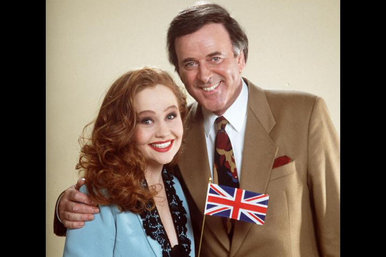
It was 1993, and the UK came
2nd in the Eurovision song contest

Mr Jim White moved a Private Members' Motion asking that
... the principle of direct suffrage (as with clergy and bishops) should be applied to the election of lay members of General Synod as a foundation stone of, and not simply one of the options in, the impending review of the synodical system.  
[The review eventually emerged as the Bridge Commission Review, 1997]

Jim White said,
The proposition itself is very brief and simple: that the House of Laity should be elected directly by all Church members. It is a principle that is laid before you. You could say it was one member, one vote, if you wanted to choose that language. The reason for adopting the principle is the trust, fellowship and equality, one with another, that our Church institutions should demonstrate. 
Speakers against the proposal said,
  1. It would be less fair because (a) most candidates would be unknown to electors, and (b) because most would vote for someone they know this proposed system would give unfair advantage to candidates from large congregations.
  2. It would increase factionalism.
  3. Allowing non-Anglicans on electoral rolls to vote would be absurd.
  4. Deanery Synods should be taken more seriously, not sidelined
  5. It would cost too much
  6. Clergy would determine the lay vote
  7. The church is not a democracy (If I had an old shilling for every time I've read this ....)
  8. All representative systems are flawed
  9. "The House of Laity is not there to represent the interests of the laity, but to bring a lay interest to the representation of the Church as a whole and as a unity.". i.e. "to assist discernment" (Tom Sutcliffe)
  10. It disadvantages candidates who are less able to use the media, and aids the already famous
  11. There would be too much discrepancy between the value of a vote for a lay representative compared to the value of a vote for a clerical representative
  12. Church elections are totally different from secular elections
  13. There would be a possibility of a legal challenge if all the administration did not work fairly
  14. People won't inform themselves about the issues
  15. Voting on manifestos alone leaves you vulnerable to misrepresentation
  16. The young will be discriminated against because they move dioceses more often
Those in favour added
  1. You can trust the people
  2. The representativeness and legitimacy of the House of Laity under the present electoral system is questioned.
  3. Deanery Synods are 'the weakest link in synodical government', and too weak to legitimate General Synod.
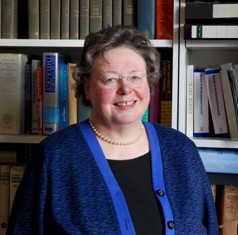
Dr Christina Baxter
The motion was amended, a move instigated by the Synod's Standing Committee and led by Dr Christina Baxter. The amendment excised the substance  of the proposal and shunted discussion into the forthcoming review of synodical government as just one option.

The final motion read:
... the principle of direct suffrage for lay members of General Synod (as with clergy and bishops) should be considered as one of the main elements in the impending review of synodical government. 
But the Chairman of that debate pulled a fast one. In order to demand a vote by houses 25 members had to request it. When asked, only 22 members stood to make the request. He decided to order a vote by houses anyway.

The result was:
Bishops: 17 for, 4 against
Clergy 107 for, 60 against
Laity 75 for, 129 against
In a vote of the whole Synod, therefore, the motion would have passed. 

It's hard to interpret the vote in relation to the debate. Most speakers were against the motion, and were evidently outvoted. It's probable that those of the House of Laity who voted against the proposal were content with the arrangements that had put them there. Some may have objected to the watering down of the motion - though Jim White recommended acceptance, though with a heavy heart.

It's also probable that the fact the vote was lost in the House of Laity meant that the Bridge Commission need give the direct suffrage of the laity very little consideration.

This was good news for opponents of the idea, given that most (not all) of their arguments were very weak and that many relied on disparaging the electorate.

And I think I'm right - and open to correction - that this was the last time the issue of direct lay election was debated in General Synod until 2011.

One member : One vote